Helsinki: The Evolution of an Olympic Logo
2 min read
Tokyo to Helsinki
With the end of the 2026 Winter Olympics I thought it would be interesting to go back in time and look at an Olympic logo that was 12 years in the making.
For some backstory, in 1940, the Olympic Games were initially meant to be held in Japan, however, in 1938, Japan handed the games back to the IOC due to the outbreak of the Second Sino-Japanese War. The games were then awarded to Helsinki, Finland, where both design and construction work began before the start of the Second World War, which led to the games being cancelled entirely.
Early Design Language
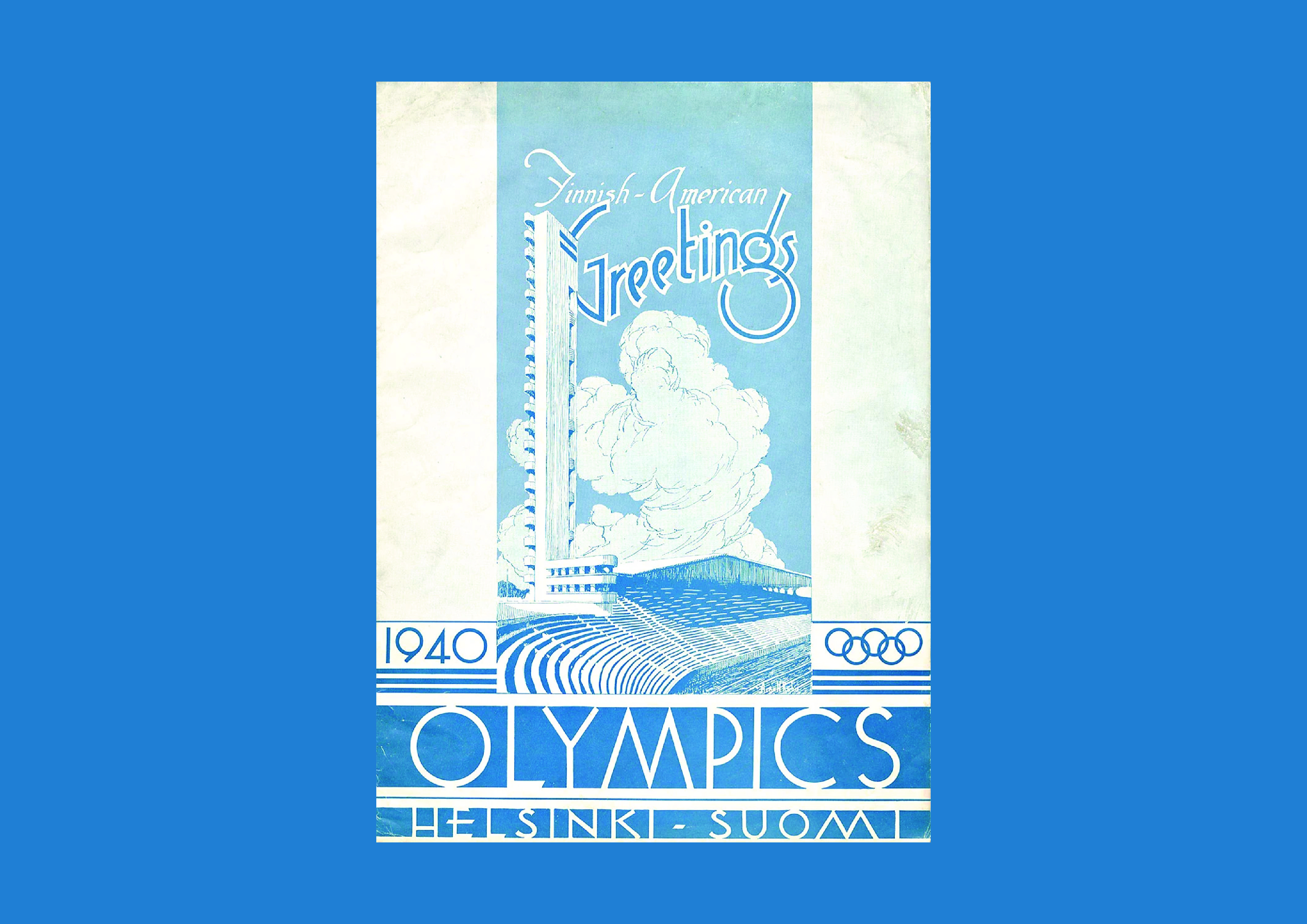
Before this cancellation, Helsinki had already created their design language for the event, they opted for muted blue backgrounds that utilised negative space as their secondary colour. The poster focusing on the stadium contained multiple fancy fonts alongside some intricate line work, capturing almost every detail of the clouds, building and stands.
Minimalism and Pop Art Influence
Then in the early 1950s the rise of both minimalism and the pop art began. This meant geometric shapes, primary colours and clean lines became the main tools for designers. After years of war, people wanted everything to be bright bold and simple. The 1952 games logo took elements from some of the original work but brought them 12 years into the future. The ideas were still fundamentally the same but the designs had been simplified and the colours became vibrant.
This was not just a case of a new designer taking on the work and adapting it but the same artist, Ilmari Sysimetsä, evolving his own designs to ensure it still spoke to the global audience.
More Articles